
Commlite 58mm Polarizing Filter
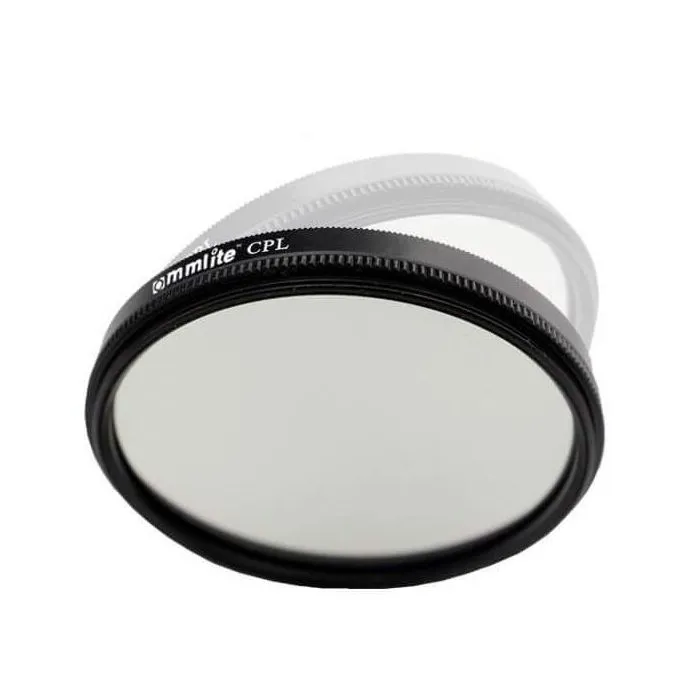
Description
A professional circular polarizing filter characterized by exceptional precision of workmanship and effectiveness of light polarization. Black aluminum ring, threaded on both sides - can be combined with other filters (e.g. UV) and a sun visor. The anti-reflective filter effectively reduces reflections, flare and other distortions.
The filters offered by us are subjected to very rigorous quality tests at many stages of production, thanks to which they receive a very high score in the quality-to-price category.
Features
- Effective polarization
- Double Threaded Ring
- Optical Glass
- ring made of aluminum
- High contrast and color reproduction
- special coatings to increase the scratch resistance of the glass
Use
Polarizing filters are most often used in landscape photography, in open spaces. Thanks to their properties, they increase the contrast between the sky and the landscape and emphasize the outline of clouds. They also enhance the color saturation and blue of the sky. The properties of a polarizing filter (especially glare reduction) cannot be reproduced with the help of photo processing programs. That is why it is one of the most basic photographic accessories.
How a Polarizing Filter Works
The polarizing filter allows only light with linear polarization in the selected direction to pass through. It absorbs light scattered in the atmosphere when photographing the sky. The blue sky becomes darker and the clouds remain white. The polarizing filter also allows you to increase the saturation of the colors of matte surfaces (e.g. green plants or fabric colors) on a sunny day. Polarization is most effective when the lens is pointed at a 90° angle to the direction of light. The polarizing filter also eliminates reflections from metallic surfaces and from the glass or water surface.
How to use a polarizing filter
The filter works most effectively at a 90° angle to the direction of light. The average angle of polarization of sunlight changes with the angle of incidence of the rays. Therefore, the color of the sky is not homogeneous, but changes from darker (navy blue, blue) to blue. With the help of a filter, we can increase or decrease this effect. When shooting with the sun behind you, you will not notice the effects of polarization (0° of the direction of incidence of light). We get the best results when the sun is as far to the side as possible. A polarizing filter lowers the exposure by 1 to 2 pitches. This is a normal property of all polarizing filters. The filter should always be placed on the outermost of the lens (when using more than one filter at the same time). The intensity of the polarizing filter is adjusted by rotating the ring on the front of the filter and thus changing the polarization plane.
More Information
| Manufacturer | Commlite |
|---|---|
| EAN | 5907568770749 |